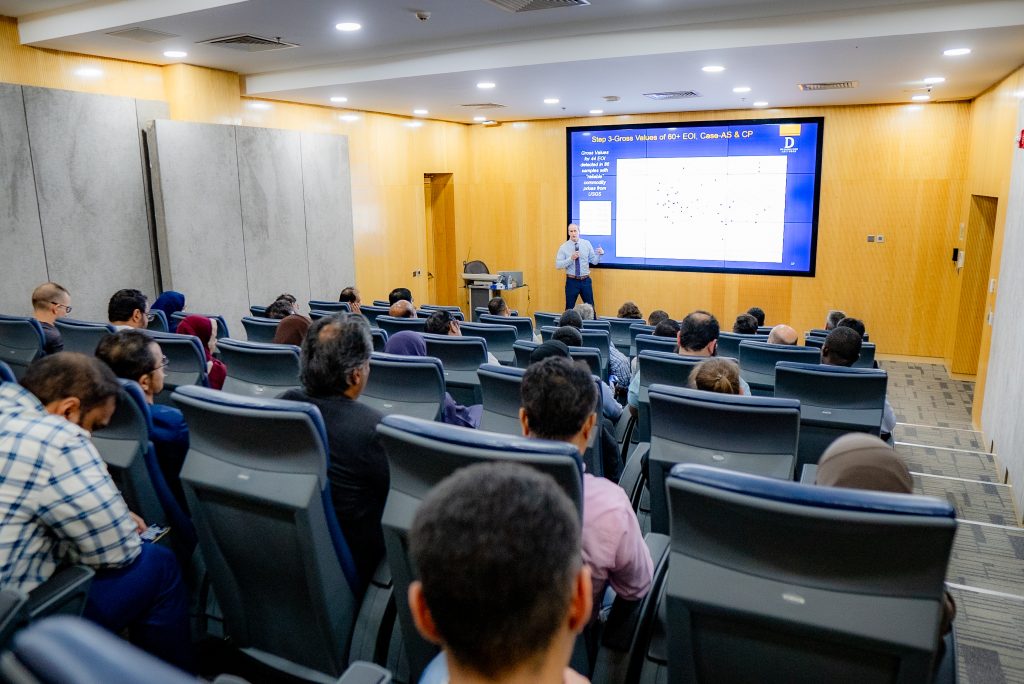
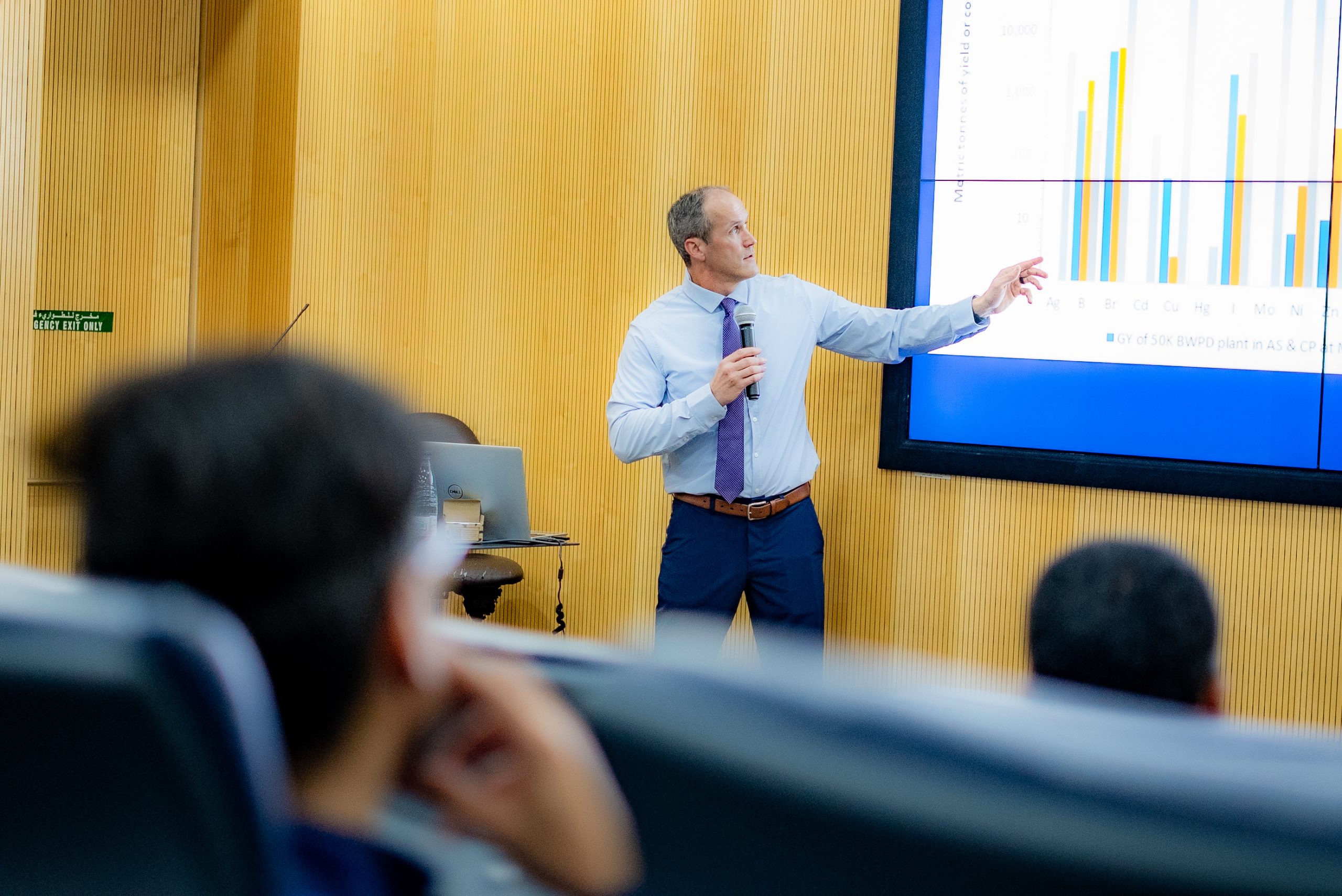
Dr. Murray opened his presentation by introducing a novel seven-step pathway for recovering Elements of Interest (EOI) from subsurface brines, highlighting the transformative potential of this approach. Traditionally regarded as waste, produced water can instead be seen as a valuable and sustainable resource. This method effectively identifies, characterizes, and evaluates the economic potential of various elements in produced water. To further this research, he emphasized partnering with producers and operators to obtain water samples from different geological formations, which is critical for understanding EOI occurrence, variability, and recovery potential.
The methodology Dr. Murray presented begins with a market analysis aimed at identifying high-value elements. This initial step is a foundation for collecting and analyzing produced water samples for feasibility and scalability, involving a comprehensive analysis of over 70 elements. As his lecture progressed, Dr. Murray categorized the EOIs into six distinct groups: major elements (such as sodium, chloride, and calcium), industrial minerals (like magnesium and bromine), critical minerals (including lithium, scandium, and strontium), Rare Earth Elements, Platinum Group Elements, and Naturally Occurring Radioactive Materials. This classification offers a deeper understanding of recovering these elements and the various value propositions associated with each group.
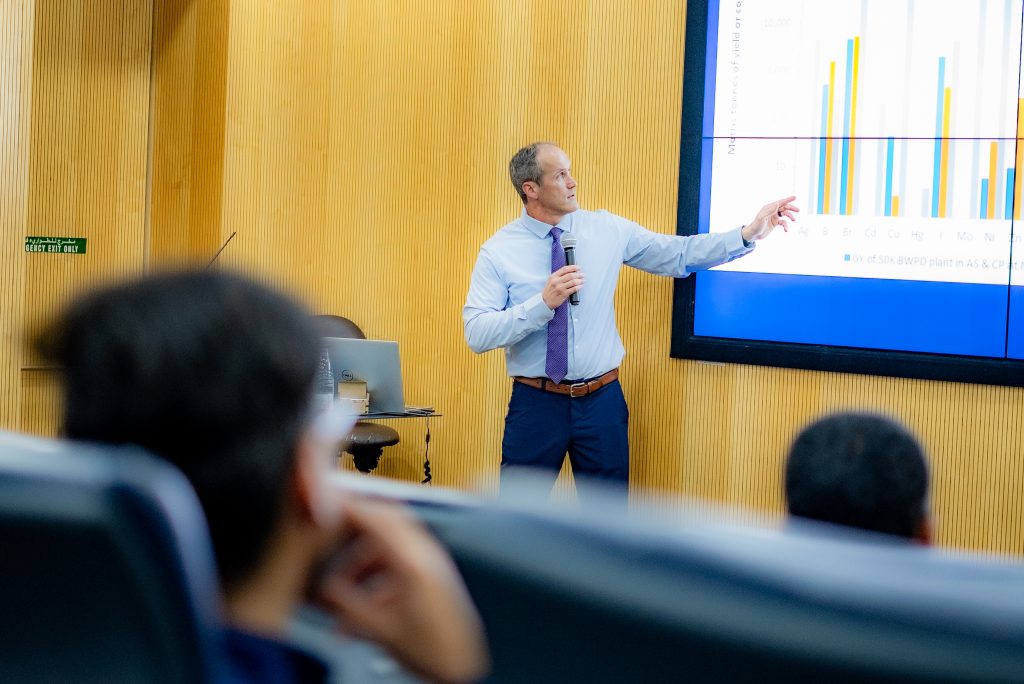
To illustrate the practical implications of this methodology, Dr. Murray calculated the gross value of these elements based on their concentrations and current commodity prices. This analysis guided the design of optimized extraction pathways that enhance market entry opportunities. He stressed the need to address regulatory frameworks and establish clear guidelines for managing produced waters in high-production areas to ensure effective future resource planning and development.
Furthermore, Dr. Murray demonstrated the practicality of his approach through three compelling case studies involving samples from over 300 wells across the United States, highlighting the total dissolved solids content on the gross value of extracted elements. He focused on specific regions known for their rich deposits: the Smackover Formation in Arkansas and Texas (noted for lithium and bromine), the Cherokee Platform and Anadarko Shelf in Oklahoma and Kansas (abundant in iodine, rubidium, and scandium), and the Williston Basin (recognized for rubidium, magnesium, and uranium). These examples illustrated the adaptability and versatility of his methodology in tackling the varied mineral-rich characteristics of different geographic areas.
The industry can secure a reliable, long-term supply of essential elements by utilizing produced water. This shift reduces reliance on conventional mining methods and promotes environmental sustainability. The event underscored the importance of integrating engineering and geochemical techniques, paving the way for innovative solutions in produced water management and opening new avenues for resource recovery.